Board Fundraising Training: Preparing Your Board for Donor Conversations
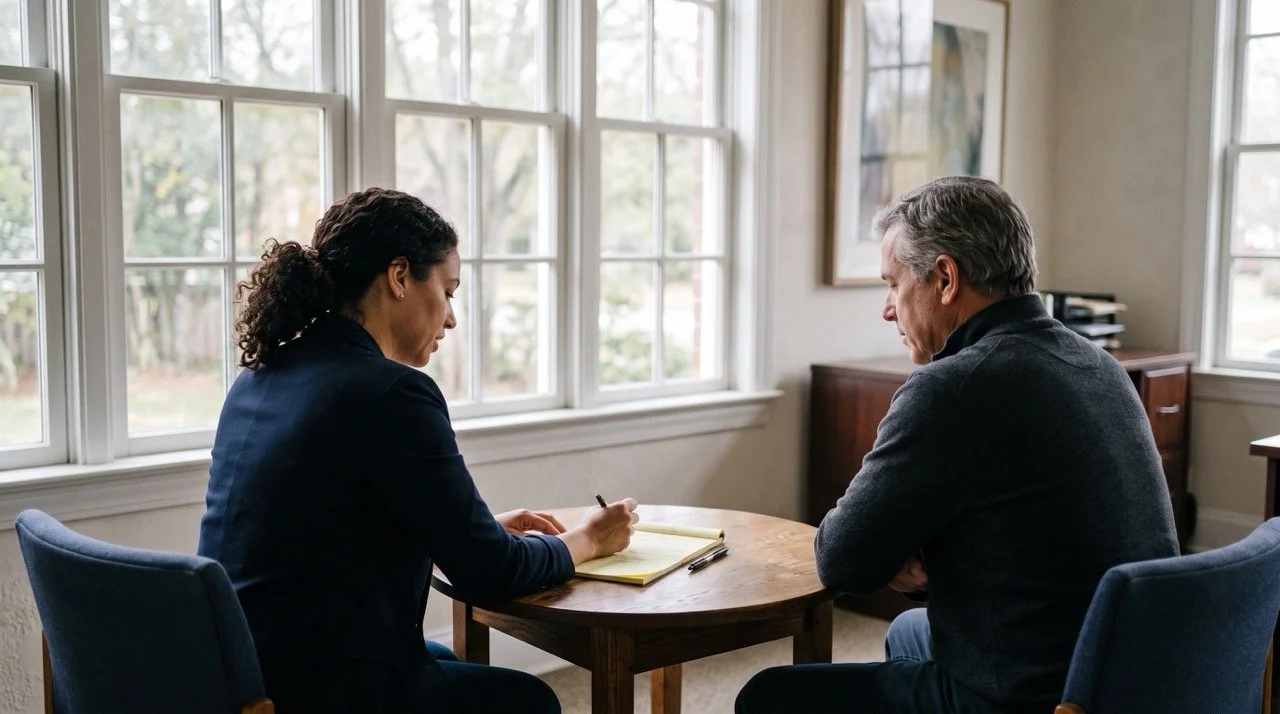
A board member agrees to grab coffee with a longtime donor. You give her the basics: the annual fund is a little behind, this donor has given for six years running, nothing formal, just a check-in. She comes back and tells you it went fine. Then his next gift arrives at exactly the amount he gave last year, to the dollar, and you realize the conversation never got anywhere near an update, a real question about how the mission is going for him, or anything close to an ask. She did not fail. Nobody ever told her what that conversation was actually for, or gave her three things to say if it stalled.
This happens on boards that have done everything right so far. You recruited board members who will actually help you fundraise, got them to agree that raising money is part of the job, and even asked one of them for a specific introduction and got it. Then the actual conversation with the donor landed in a board member's lap with nothing underneath it but good will. Good will gets someone to say yes to the coffee. It does not tell them what to say once they sit down.
Most development directors know this and still skip past it, because training sounds like one more thing to plan on top of an already full calendar. I understand that instinct completely. But the gap between a board member who is willing and a board member who is ready is not closed by willingness, and it is not closed by handing them a case statement to read on the drive over. It closes in the fifteen or twenty minutes before they ever sit down with a donor, when someone walks through what the conversation is actually going to require of them.
The Conversation Nobody Rehearses
Talking about money is genuinely hard, and not just for board members who are new to it. A 2024 Bankrate survey of more than 2,500 U.S. adults found that only 38 percent are comfortable discussing their bank account balance with family and close friends, compared with 78 percent who are comfortable discussing politics and 81 percent who are comfortable discussing religion or health. Money is one of the more taboo subjects most people navigate, and a donor conversation is, underneath the mission language, a conversation about money. Handing a board member into that territory with no preparation asks them to do something most adults find harder than talking about their faith or their politics, cold, on your organization's behalf.
Board education tends to make this worse rather than better. BoardSource's own research on how organizations educate their boards found that 69 percent rely mainly on written resources — handbooks, policy binders, orientation packets — while genuinely interactive training, workshops, and practice sessions are far less common. A binder can tell a board member what the annual fund is. It cannot get them comfortable saying a number out loud, and it cannot prepare them for the moment a donor asks a hard question back.
Most boards are not avoiding interactive training on purpose. It is simply easier to send a packet than to schedule a practice session, and a packet feels like it counts as preparation because something concrete got handed over. But a board member who has read about your programs and a board member who has said, out loud, "here's what I'd tell a donor who asks why we still need money after that grant" are prepared for two very different things. Only one of them is ready for the actual conversation.
I know this gap well. I spent years in pastoral ministry handing people scripture and good intentions and expecting them to somehow arrive at an honest, personal conversation on their own. It rarely worked that way. People get comfortable with hard conversations by practicing them out loud, with another person in the room, not by reading about them alone.
This is different ground than the board's own giving or the case you have built for support. Those tell a board member what the organization needs and why it matters. Training tells them what to actually say and do once they are sitting across from another human being who is deciding whether to give.
What Training Actually Has to Teach
Board fundraising training goes wrong most often by trying to hand people a script. A script sounds stilted coming out of someone who did not write it, and the moment a donor asks an unscripted question, the board member is stranded. What actually helps is narrower than a script and more durable: three specific things a board member can carry into any conversation.
The first is the case for support, in their own words. Not your case for support — theirs. Ask each board member to describe, in two or three sentences, why they personally give or care about the mission. That is the version they will actually say out loud, because it is true and it is theirs. It will not sound like your annual report, and it should not.
The second is a short list of the questions donors actually ask. Most board members can anticipate "what does my gift pay for." They freeze on the harder ones: how much of the budget goes to overhead, why the organization is fundraising if it just received a grant, or what happens if they cannot give as much this year. You do not need to hand them a perfect answer to every version of these questions. You need to walk through the two or three that come up most for your organization, so the first time is not live, in front of a donor. If your shop has been asked "how much actually goes to the cause" more than once this year, that is your answer to which question comes first.
The third is permission to not know, and a plan for what happens next. The single most useful sentence a board member can learn is some version of "that's a great question, let me find out and get back to you." A board member who tries to answer a question they should not answer alone almost always does more damage than one who simply loops in staff. Tell them, before they ever sit down with a donor, exactly who to call and how fast.
Run It Like a Practice, Not a Lecture
None of the three things above sink in from a slide deck. Fundraising trainers who do this well treat it like a rehearsal, not a briefing. Nonprofit Quarterly describes a training exercise built around a short role-play: one person plays the donor, another plays the board member making a simple ask, and the two work through the conversation using a real, modest scenario before trading roles and debriefing what felt natural and what did not. Capital Campaign Pro's volunteer training exercises follow a similar shape — pairs research a donor together, practice asking questions that open a conversation instead of closing it, and rehearse listening to each other before anyone rehearses asking. The through-line in both is time spent talking out loud, in a low-stakes room, with a partner who can say "that landed a little formal" before a real donor ever gets the chance to think it.
You do not need a consultant or a half-day retreat to run something like this. Twenty minutes at the development committee's next meeting is enough for one pair to work through a single scenario and debrief it with the group. Do this three or four times a year rather than once before a campaign, and it stops being a special event and starts being how your board actually gets ready. The board members who end up making real donor connections are rarely the ones with the most natural charisma. They are the ones who have said the hard sentence out loud enough times that it no longer surprises them.
One more thing worth saying plainly: the first time anyone tries this, it will feel a little awkward. That is fine, and it is actually the point. A board member who has already felt the awkward version of a donor conversation, in a room with people who like her, has one less unfamiliar thing to absorb when the real conversation happens. Do not wait for the practice session to feel smooth before you call it useful.
If your board is finally having real conversations with donors, the next question is what happens between those conversations and the actual gift — that is where a steady cultivation rhythm keeps momentum from dying in the gap.
Want to develop your fundraising skills? Take a look at my Claude Skills page.
Explore the Skills
Where to Start This Week
If this resonates, here is what I would tell you to do this week.
Ask each board member, in writing or in a short conversation, to describe in two or three sentences why they personally give. Save these. They are the raw material for real training.
Pull together the three or four questions donors most often ask your organization, and write short, honest answers to each. Include at least one version of "here's what I'd say if I don't know."
Put twenty minutes of role-play on the agenda for your next development committee or full board meeting. One pair, one simple scenario, one debrief. Do not aim for polish the first time.
Tell every board member, in plain language, who to call and how fast when a donor asks something they cannot answer, and write it down somewhere they will actually see it again.
If a donor conversation this quarter is headed toward a gift bigger than your board member expects, it is worth having a plan ready for exactly that moment.
Curious how you or one of your major donors could maximize their giving? Use our DAF Calculator.
Try the DAF Calculator
None of this turns a board member into a professional fundraiser, and that was never the goal. It makes them someone who has said the true, specific reason they care about your mission out loud enough times that a donor across the table hears it and believes it. That is worth more than a script ever was.
C.J. Bergmen is a pastor, licensed counselor, and fundraising strategist who helps organizations and generous individuals approach giving with honesty and long-term vision.